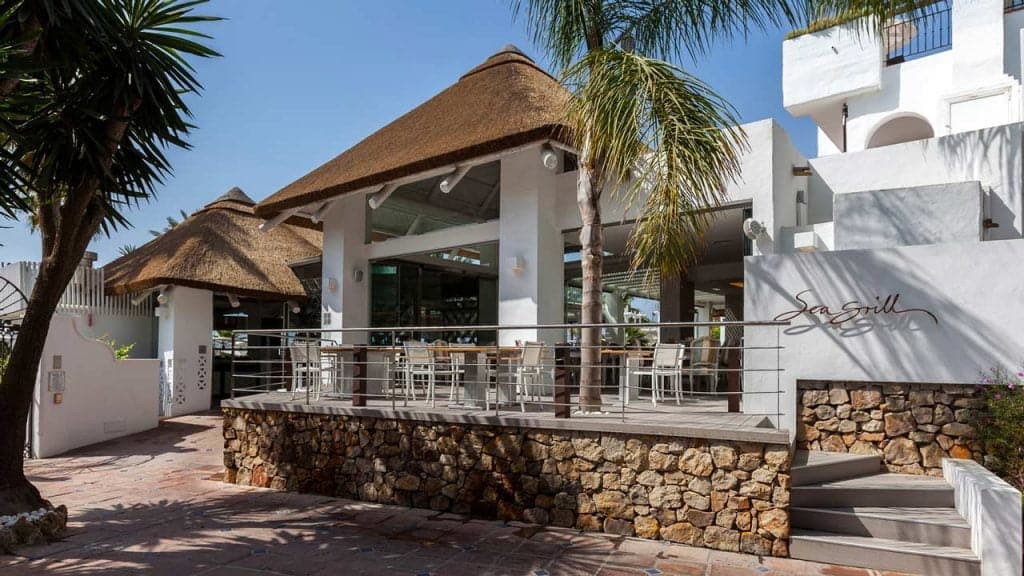
When you’re specifying a roof for a hotel terrace, beach club or restaurant, the decision usually comes down to a handful of materials: natural thatch, ceramic tile, metal or steel, and synthetic shade structures like sailcloth or canvas. Each looks different on a moodboard. They perform very differently once they’re actually in use — carrying daily footfall, coastal salt air, and a Mediterranean summer.
Here’s how they actually compare, category by category.
Thermal Performance: Which Roof Actually Keeps Guests Cool?
This is usually the first thing that matters to an operator, and the differences are significant.
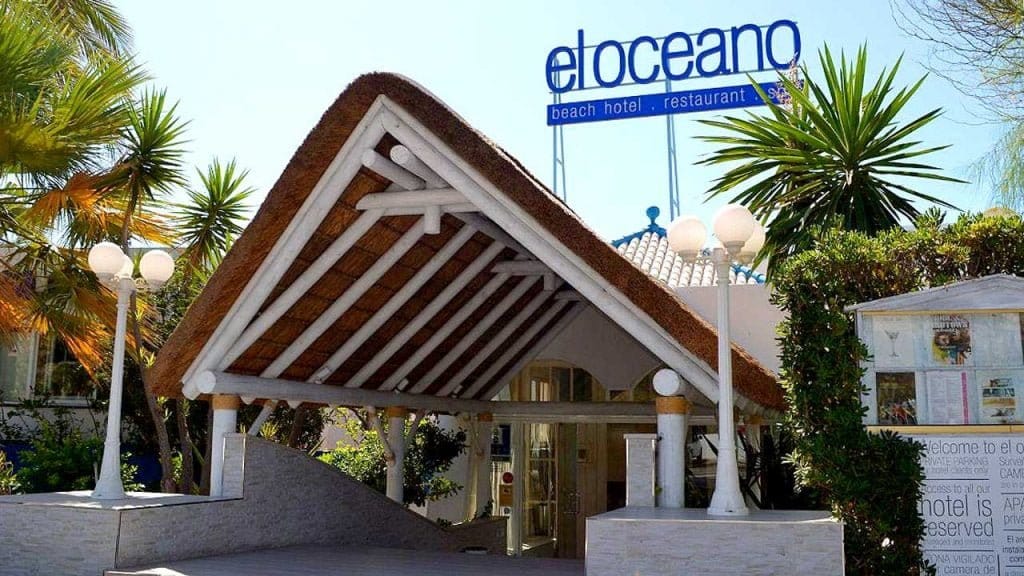
- Cape Reed thatch: Densely packed reed creates millions of trapped air pockets, giving genuinely superior insulation. Guests underneath a well-built thatch canopy can feel noticeably cooler than the ambient temperature outside — without a single fan or mister running.
- Metal or steel roofing: Absorbs and radiates heat, often making the space beneath it hotter in peak summer than standing in open shade.
- Ceramic tile: Better than metal, but still nowhere near thatch’s natural insulating capacity, and tile roofs typically need mechanical cooling support for enclosed spaces.
- Synthetic shade (sailcloth/canvas): Blocks direct sun but does little to manage ambient heat — air still moves freely underneath, and on still days, spaces can feel stagnant and hot.
For any commercial space where guest comfort drives dwell time and repeat visits — a pool bar, a beach club, an outdoor restaurant — this single factor often settles the decision on its own.
Fire Safety: Addressing the Biggest Misconception
The most common objection we hear from architects and developers considering thatch is a fire safety concern — understandable, given the material’s reputation from untreated, older installations. It’s also the easiest myth to correct.
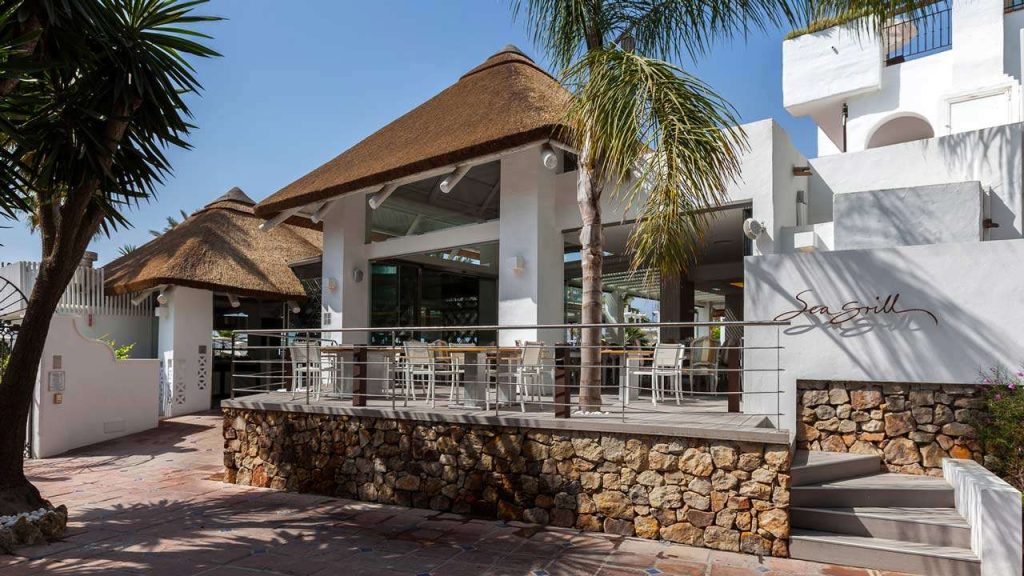
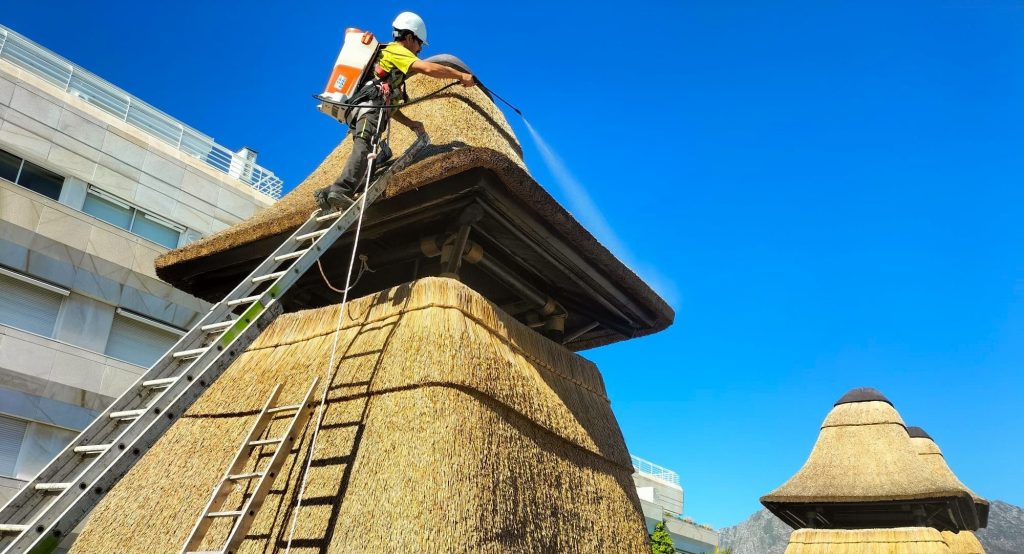
Every Cape Reed commercial roof is installed with Fireshield, our proprietary fire-retardant system. It combines a treated underlay with a surface coating engineered specifically for natural thatch, dramatically reducing flammability and flame spread. Fireshield is built to meet the fire safety standards required for commercial public spaces across Europe — the same standard hotels, restaurants and licensed venues are held to regardless of roofing material.
In practice, this means you get the authentic look and performance of natural thatch, backed by documentation your project’s fire compliance sign-off actually requires. Metal and tile carry their own fire ratings, of course, but they aren’t inherently “safer” than a properly treated thatch roof — they’re just a different set of compliance requirements to satisfy.
Lifespan & Maintenance: The Real Cost Over Time
This is where the comparison gets interesting, because upfront material cost tells you very little about total cost of ownership.
| Feature | Cape Reed Thatch | Ceramic Tile | Metal/Steel | Synthetic Shade |
|---|---|---|---|---|
| Typical Lifespan | 20–30+ years | 25–50 years (but with cracking/repair over time) | 15–30 years (coastal corrosion shortens this) | 3–10 years |
| Coastal/Salt Air Resistance | Excellent — engineered for it | Good, but grout and fixings degrade | Poor without specialist coatings, prone to rust | Fabric degrades quickly in UV and salt exposure |
| Routine Maintenance | Periodic inspection, minimal upkeep | Occasional re-grouting, tile replacement | Repainting/recoating to manage corrosion | Regular fabric replacement, seasonal takedown |
| Structural Guarantee | 15-year structural warranty | Varies by manufacturer | Varies by manufacturer | Rarely offered beyond 1–2 years |
Cheaper, unrefined thatch — soft grasses or straw without proper treatment — genuinely does have the maintenance reputation people worry about, typically lasting only 8–12 years. That’s not the material we use. Properly sourced and treated Cape Reed thatch, laid at the correct pitch by trained thatchers, is a fundamentally different proposition — closer in lifespan to premium tile, with lower ongoing maintenance demands than metal in a coastal environment.
Design Flexibility
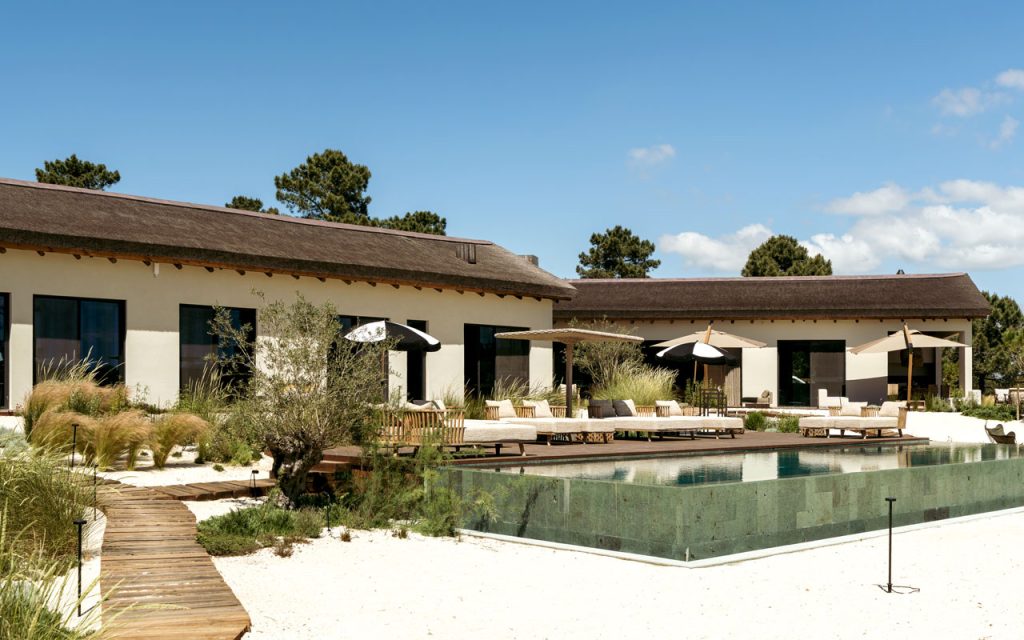
Thatch is the only one of these materials that genuinely bends to your architecture rather than the other way around. Curved rooflines, irregular footprints, dramatic overhangs — these are straightforward for hand-laid thatch over an engineered timber substructure, and considerably harder (or impossible) to achieve cleanly in tile or metal without visible seams and joints. Synthetic shade can approximate curves but rarely holds a crisp, architectural line the way a properly finished thatch roof does.
Sustainability
Cape reed is a renewable, biodegradable material, requiring minimal processing before installation and returning to the earth naturally at the end of its life. Metal and tile are more energy-intensive to manufacture and transport, and synthetic shade fabrics are typically petroleum-based and non-biodegradable, with a far shorter replacement cycle adding to their lifetime environmental cost.
Which Should You Choose?
If your priority is guest comfort, sustainability credentials, and a distinctive architectural finish — and you’re working with a supplier who can produce proper fire compliance documentation and a structural warranty — commercial thatch is very hard to beat on total value over the life of the building. Metal and tile remain sensible choices for certain structural or budget contexts; synthetic shade suits temporary or seasonal installations where longevity isn’t the priority.
For permanent commercial structures expected to perform for decades — hotel terraces, beach club canopies, flagship restaurant roofs — Cape Reed thatch, properly specified and treated with Fireshield, consistently comes out ahead on the metrics that matter most: comfort, compliance, and lifetime cost.
Planning a commercial roofing project?
Our team can talk you through material options, fire compliance documentation, and design possibilities for your specific site. Get in touch with our commercial thatching team →
FAQ’s
Is thatch actually safe to use for a commercial building?
Yes, when it’s treated properly. Untreated or poorly maintained thatch does carry a higher fire risk, which is where the material’s reputation comes from. Every Cape Reed commercial roof is installed with Fireshield, our proprietary fire-retardant system, and comes with fire compliance documentation suitable for your project’s permitting process — the same standard of accountability you’d expect from any commercial roofing material.
How does the cost of thatch compare to tile or metal roofing long-term?
Upfront material cost varies by project, but total cost of ownership tells a different story. Properly sourced and treated Cape Reed thatch typically lasts 20–30+ years with minimal maintenance, while metal roofing in coastal environments often needs recoating or replacement well before then due to salt-air corrosion. Factoring in maintenance and replacement cycles, thatch is frequently the more cost-effective choice over the life of the building, not just at installation.
Can thatch handle a coastal environment with salt air and high humidity?
Yes — this is one of its strongest advantages. Cape reed’s natural composition makes it highly resistant to moisture, fungal decay and salt exposure, which is exactly why it performs so well on beachfront restaurants, pool bars and coastal hotel terraces. Metal, by contrast, is particularly vulnerable to corrosion in the same conditions without specialist coatings.
How much maintenance does a commercial thatched roof actually need?
Far less than most people expect. A properly installed Cape Reed roof requires periodic inspection rather than active upkeep — there’s no repainting, recoating or regular fabric replacement involved, unlike metal or synthetic shade structures. Most maintenance needs are identified during routine inspection long before they become a problem, which is part of why we back every commercial installation with a 15-year structural warranty.

About Cape Reed Team
Our expert team at Cape Reed Spain brings decades of experience in sustainable thatching and premium outdoor living solutions.
You Might Also Like
Discover more outdoor living inspiration
From Concept to Completion: What to Expect When Specifying a Commercial Thatched Roof
For architects and developers who haven’t specified thatch before, the biggest hesitation usually isn’t the ...
What Is Cape Reed Thatch — And Why Is It Different From Brezo?
If you have ever visited a beachfront resort, a luxury villa, or a boutique hotel in southern Spain and admired the natu...
Fireshield Explained: How Thatched Roofs Meet Spain’s Fire Regulations
Of all the questions we receive from architects, property developers, and homeowners considering thatched roofing in Spa...