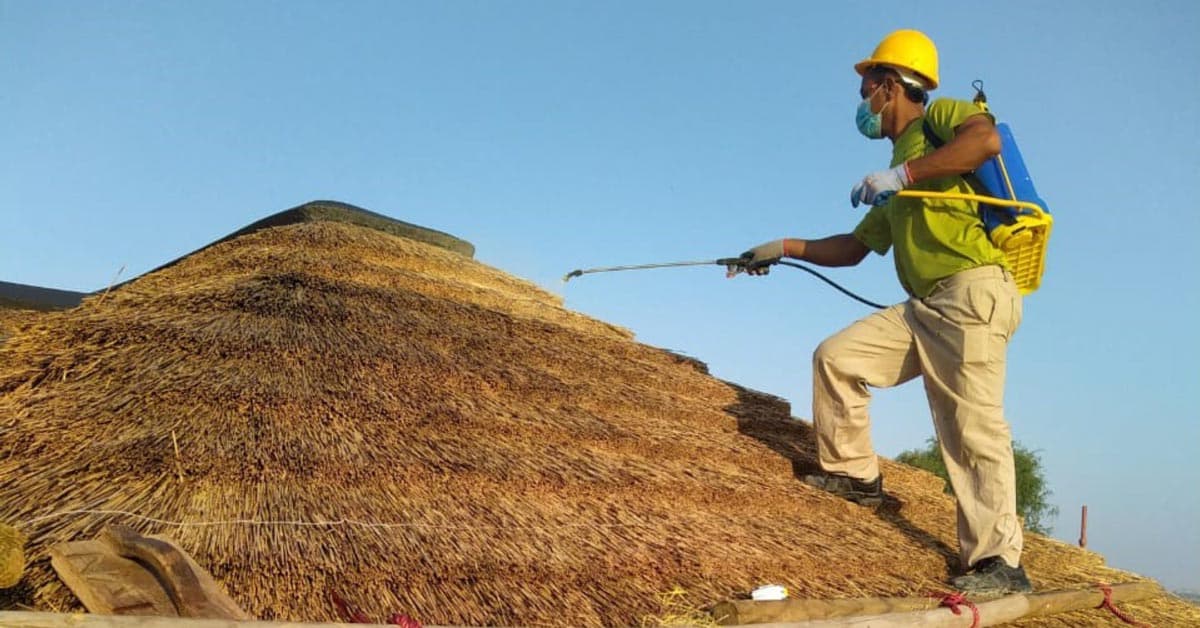
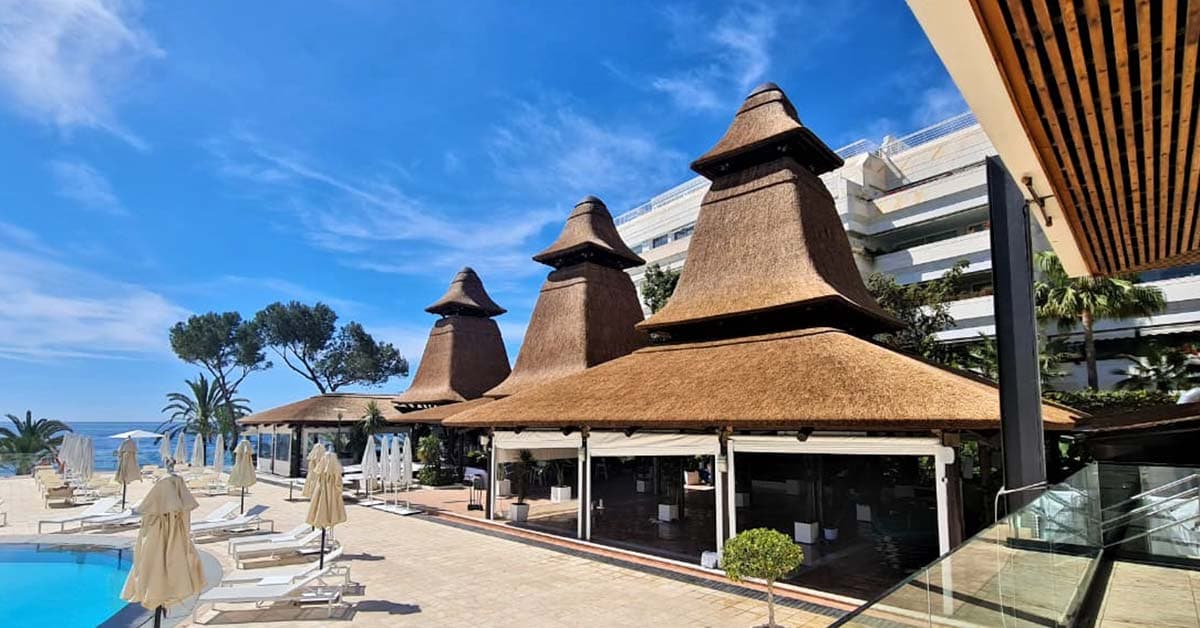
Thatched roofs are having a well-deserved renaissance across Spain and Europe. From luxury villas on the Costa del Sol to boutique resorts in Andalucía, more property owners and developers are choosing natural thatch for its stunning aesthetic, exceptional insulation, and eco-friendly credentials.
But there is one question that comes up almost every time: what about fire?
It is a fair concern. Spain is a country where summer wildfires are a very real threat, where temperatures regularly push above 40°C, and where fire safety regulations are becoming increasingly stringent. For anyone investing in a thatched roof, fire protection is not an afterthought — it is a fundamental part of the project.
That is exactly why you need Cape Reed Fireshield.
The fire risk reality for thatch roofs in Spain
Natural thatch — is a dense, tightly packed roofing material. When properly constructed, a professional thatch roof is far less fire-vulnerable than many people assume. However, untreated thatch is still classified as a combustible material, which creates two significant challenges for property owners in Spain:
Insurance and liability. Insurers increasingly require documented fire-retardant treatment for thatched structures, particularly in high-risk zones. Without it, you may find your policy invalid or your premiums prohibitively expensive.
Regulatory compliance. Spain’s Technical Building Code (Código Técnico de la Edificación, or CTE) governs fire safety in construction through its Basic Fire Safety Document (DB-SI). While regulations have historically focused on conventional buildings, scrutiny of combustible cladding and roofing materials has intensified significantly since 2024, in line with broader EU fire safety frameworks. The EU’s Construction Products Regulation (CPR 2024/3110) is also bringing greater harmonisation to fire classification standards across member states — meaning property developers and architects across Spain will face a higher bar for demonstrable compliance in the years ahead.
Simply put: if you are building or renovating with natural thatch in Spain today, fire-retardant treatment is no longer optional. It is essential.
What is Fireshield?
Fireshield is Cape Reed International’s proprietary fire-retardant treatment system, specifically formulated for natural thatch and timber structures.
It is not a coating or a paint. Fireshield is a deeply penetrating treatment that works at a material level, dramatically reducing the ignition point and flame-spread rate of natural thatch and timber without altering its appearance, texture, or performance.
Here is what makes it different from generic fire-retardant products on the market:
Formulated specifically for thatch and timber. Many fire-retardant products are designed for synthetic or industrial materials. Fireshield is engineered around the specific properties of natural reed and timber — the porosity, the fibre structure, the way moisture interacts with the material in different climates.
Environmentally responsible. Fireshield’s formula is environmentally friendly and does not introduce harmful chemicals into the structure or the surrounding environment. This matters enormously for eco-conscious clients and for properties near protected natural areas, which is common across coastal Spain.
Invisible protection. Once applied, Fireshield leaves no visible residue. Your thatch roof looks exactly as it should — naturally beautiful — while offering significantly enhanced fire resistance.
Tested and certified to international standards. Cape Reed’s Fireshield products are rigorously tested and certified to meet international fire safety benchmarks, giving you documented proof of compliance for insurers, local authorities, and building inspectors.
How Fireshield works
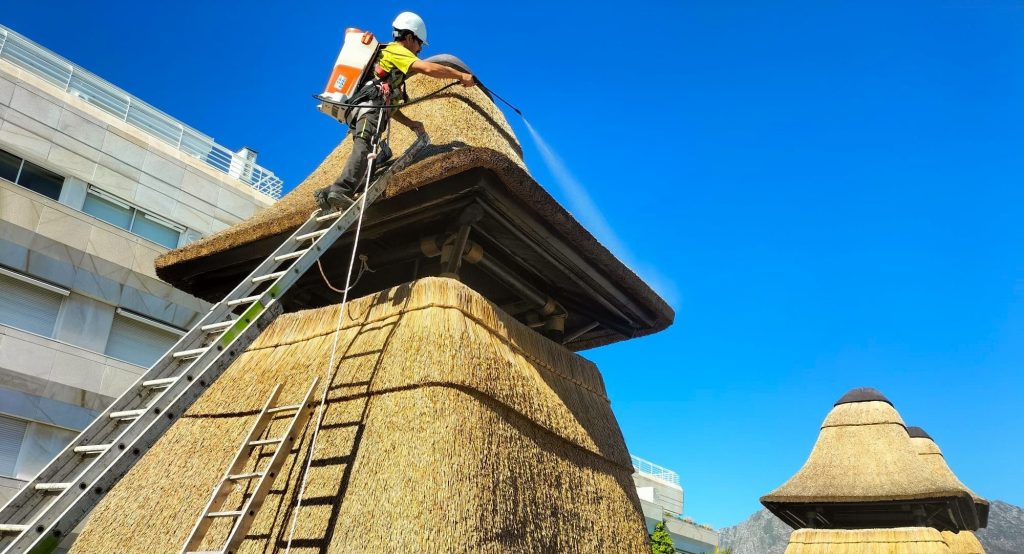
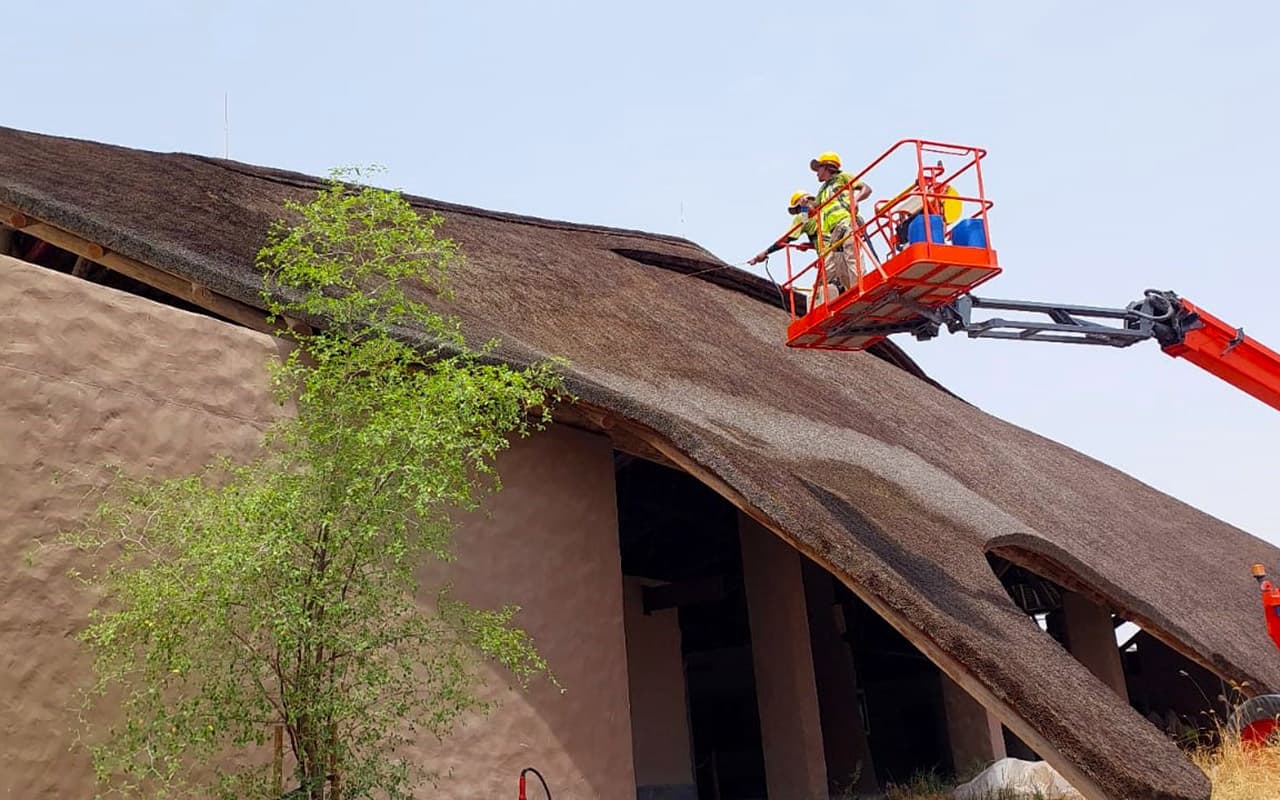
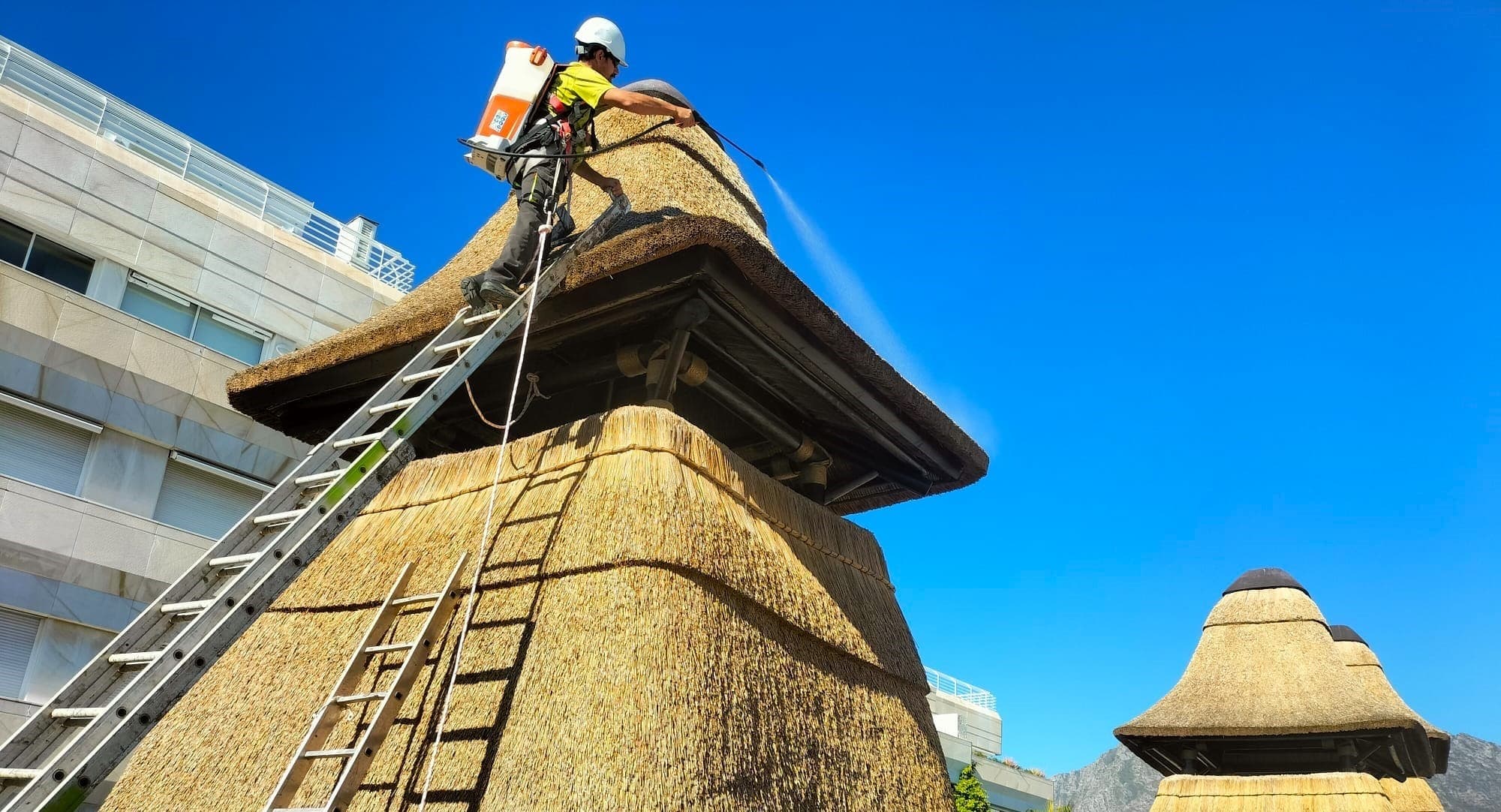
The treatment is applied by Cape Reed’s trained specialists, either during the thatching process or as a retrofit treatment on an existing roof. The product is sprayed evenly across the thatch surface and penetrates deep into the reed stems and timber fibres.
When exposed to heat or flame, the treated material undergoes a chemical reaction that dramatically slows combustion. Rather than igniting readily and spreading flame, treated thatch chars slowly, buying critical time for evacuation and emergency response — and often preventing a fire from taking hold at all.
Fireshield is available in two formulations:
- Thatch Fire Retardant — designed for natural reed thatch roofs, reducing flammability while preserving the material’s natural insulating and aesthetic properties.
- Timber Fire Retardant — formulated for pergolas, decking, gazebos, bridges, and other timber structures, providing the same level of protection for all wooden elements of your outdoor space.
For a comprehensive outdoor build — a thatched lapa with a timber deck and pergola, for example — Cape Reed applies both treatments as standard, ensuring full-structure protection.
Why it matters for resorts, villas, and commercial properties
Private homeowners are not the only ones who need to think about this. For hotel developers, resort operators, and commercial property owners in Spain, the stakes are even higher.
A single fire incident at a hospitality property can mean loss of life, total destruction of the structure, reputational damage that takes years to recover from, and complex legal liability. Insurers for commercial hospitality properties are rigorous — and they are getting more so.
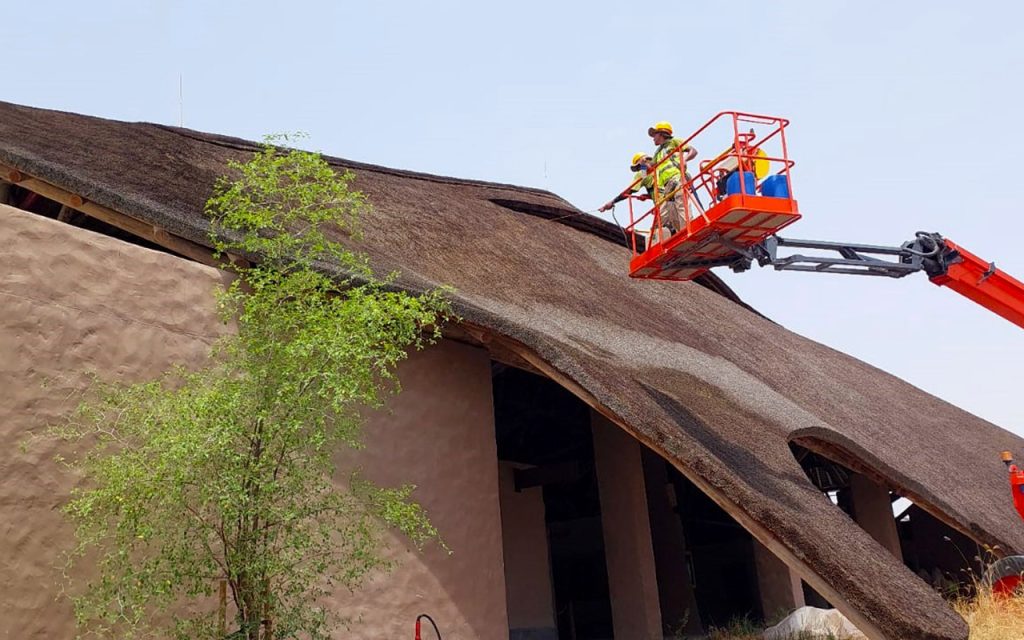
Cape Reed works with resort and hotel developers across Spain and Europe who specify Fireshield as a mandatory part of every thatched structure they commission. It forms part of the project specification from day one, not as a bolt-on but as a core component of a responsibly built outdoor space.
For clients pursuing sustainability certifications or ESG reporting, Fireshield’s environmentally responsible formulation also supports those goals — fire safety and environmental responsibility do not have to be in conflict.
The Cape Reed approach: safety built in, not added on
At Cape Reed International, we have been constructing thatched roof structures for over two decades. In that time, we have built projects across Europe, Africa, and beyond — and we have seen first-hand what happens when fire protection is not taken seriously.
Our position is straightforward: every thatched roof and timber structure we build in Spain receives Fireshield treatment as standard. We do not treat it as an upgrade or an optional extra. It is part of what it means to build responsibly with natural materials.
When you commission a thatch roof or timber structure with Cape Reed, you receive:
- Professional application by trained specialists
- Certified, documented fire-retardant treatment for insurance and compliance purposes
- A structure that retains its full natural beauty
- Peace of mind that your investment is protected
Ready to protect your thatch roof?
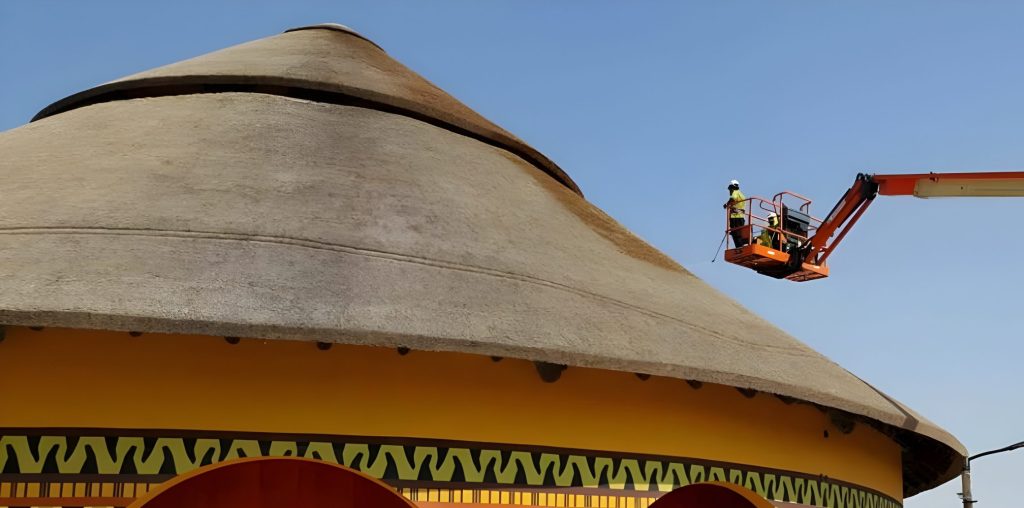
Whether you are planning a new build or looking to retrofit protection onto an existing thatched structure, Cape Reed’s Fireshield treatment is available across Spain and Europe.
Shop Fireshield →
Contact our team to discuss your project →
Frequently asked questions
1. Does Fireshield change the look or feel of my thatch roof?
No. Once applied and dried, Fireshield leaves no visible residue on your thatch or timber. Your roof will look exactly as it did before treatment — the natural colour, texture, and character of the reed are fully preserved. This is one of the reasons we developed a treatment specifically for natural thatch rather than adapting an industrial product.
2. How often does Fireshield need to be reapplied?
The frequency of reapplication depends on the age of the thatch, the local climate, and exposure conditions. As a general guide, we recommend a professional inspection and reapplication assessment every three to five years. In high UV or coastal environments — common in southern Spain — more regular checks are advisable. Cape Reed can advise on the right maintenance schedule for your specific property and location.
3. Is Fireshield a legal requirement for thatched roofs in Spain?
While Spain’s CTE does not single out thatch roofing with a blanket blanket mandate, combustible roofing materials are subject to fire safety requirements under the DB-SI framework, and compliance with these is required for planning and building approvals. Beyond regulation, most insurers now require documented fire-retardant treatment as a condition of cover for thatched properties. Given the increasing scrutiny on combustible materials under both Spanish and EU frameworks, we strongly advise all clients to treat Fireshield as an essential, not optional, investment.
4. Can Fireshield be applied to an existing thatch roof, or only during construction?
Fireshield can be applied to both new and existing thatch roofs. If you have a thatched structure that has not been treated — whether built by Cape Reed or another contractor — our team can assess the roof and carry out a retrofit treatment. We will inspect the condition of the thatch first, as Fireshield is most effective when the roof is in good structural condition.
5. Does Fireshield cover timber structures as well as the thatch itself?
Yes. Cape Reed offers a dedicated Timber Fire Retardant as part of the Fireshield range, formulated specifically for wooden structures including pergolas, decking, gazebos, and structural timber elements. For full outdoor builds combining thatch roofing and timber construction, we apply both treatments to ensure every element of your outdoor space is protected to the same standard.

About Cape Reed Team
Our expert team at Cape Reed Spain brings decades of experience in sustainable thatching and premium outdoor living solutions.
You Might Also Like
Discover more outdoor living inspiration
What Is Cape Reed Thatch — And Why Is It Different From Brezo?
If you have ever visited a beachfront resort, a luxury villa, or a boutique hotel in southern Spain and admired the natu...
Fireshield Explained: How Thatched Roofs Meet Spain’s Fire Regulations
Of all the questions we receive from architects, property developers, and homeowners considering thatched roofing in Spa...
Why Fire Protection Is Essential in Spain — And How Cape Reed Fireshield Can Safeguard Your Property
Spain’s summers are known for their beauty — long sunny days, vibrant outdoor living, and thriving hospitality venues. B...