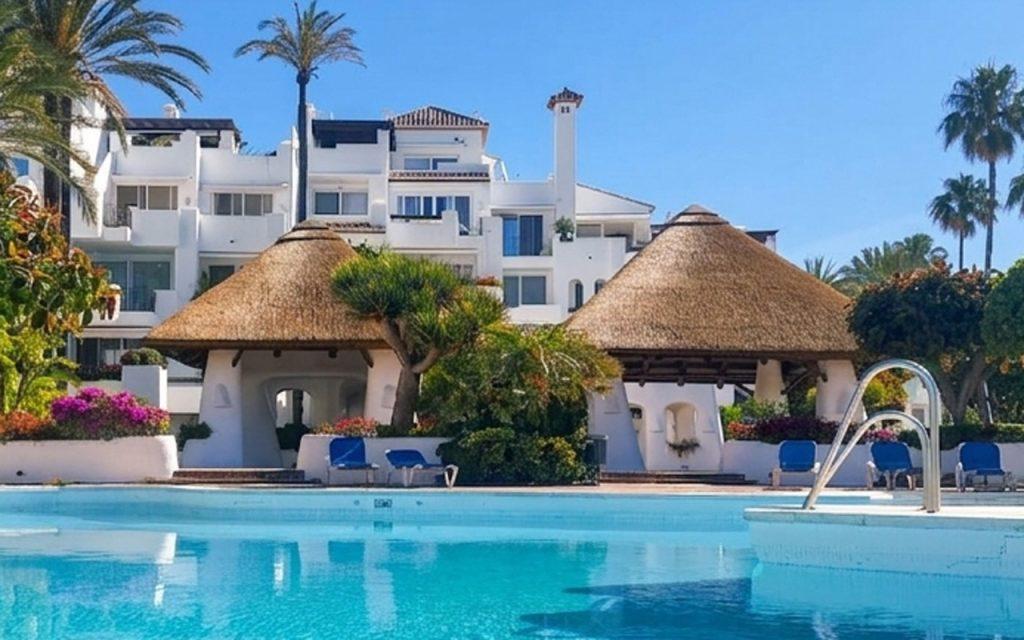
A thatched roof is one of the most beautiful ways to cover a gazebo, a pool house or a beach club in southern Spain. But if you are new to thatch, the first questions are usually practical ones. Will it survive the summer sun? What happens in a winter storm? Is it a fire risk?
The short answer is yes, a thatched roof is safe in Spain's climate, provided it is made from the right reed, installed at the right pitch and protected against fire. Here is how natural thatch handles each of the conditions you will face on the Costa del Sol and beyond.
How does thatch cope with the Spanish sun and heat?
Very well. Cape Reed thatch is made from Thamnochortus insignis, a reed from South Africa's Western Cape. Each stem is dense and coated with a natural layer of silica that protects it from UV radiation.
Thatch is also a natural insulator. A thick layer of reed keeps the space underneath noticeably cooler than a metal or fabric roof, which is why it has been used in hot climates for centuries. Over time the surface weathers from honey-gold to a soft silver-grey, while the layers beneath stay intact.
Is a thatched roof waterproof in winter rain?
Yes, when it is laid correctly. A thatched roof sheds water through its layers rather than absorbing it. Installed at the correct pitch, with proper underlay and capping, Cape Reed thatch is a genuinely weatherproof roofing system that handles the heavy downpours the Costa del Sol gets in winter.
This is one of the biggest differences from brezo, the Spanish heather often used for rustic coverings. Brezo is usually decorative rather than waterproof, and as it dries out, gaps appear. We compare the two in What Is Cape Reed Thatch, and Why Is It Different From Brezo?
What about wind?
A thatched roof is only as strong as the structure beneath it. Cape Reed builds every thatched structure on an engineered timber frame, with the reed bundles fixed tightly to the battens and finished with a secure ridge capping. All Cape Reed structures and thatching come with a 15-year structural guarantee.
Can a thatched roof handle salt air on the coast?
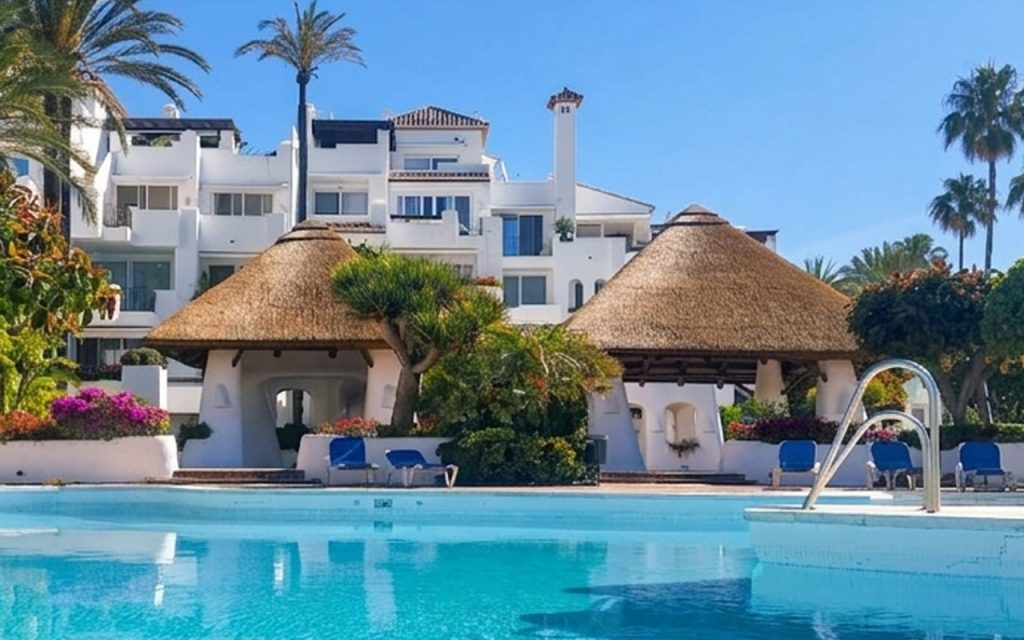
Yes, and coastal projects are a large part of what we do. At Alcazaba Beach in Estepona, a beachfront residential community, the original brezo roofs had deteriorated after years of sea air. In early 2026 we removed them, repaired the timber structures and installed 300 m² of Cape Reed thatch with full fire protection.
On a coastal property in southern Spain, a professionally installed Cape Reed roof typically performs well for 15 to 25 years before it needs refurbishment.
Is a thatched roof a fire risk in Spain?
This is the question we hear most, and it deserves a straight answer. Untreated, dry natural roofing can catch fire, which is why every Cape Reed thatched roof includes our Fireshield fire protection system as standard:
- FireBloc, a fire-retardant cloth installed beneath the thatch during construction, which stays in place for the life of the roof.
- Fireshield coating, a fire-retardant treatment applied to the finished thatch surface, which does not change the look of the reed. The coating is renewed every 3 years as part of routine maintenance.
Together, these significantly reduce how easily the thatch can ignite and help structures meet Spain's fire safety requirements under the Código Técnico de la Edificación. We provide technical documentation for architects, insurers and planning applications. You can read the full detail in Fireshield Explained.
What maintenance does a thatched roof need?
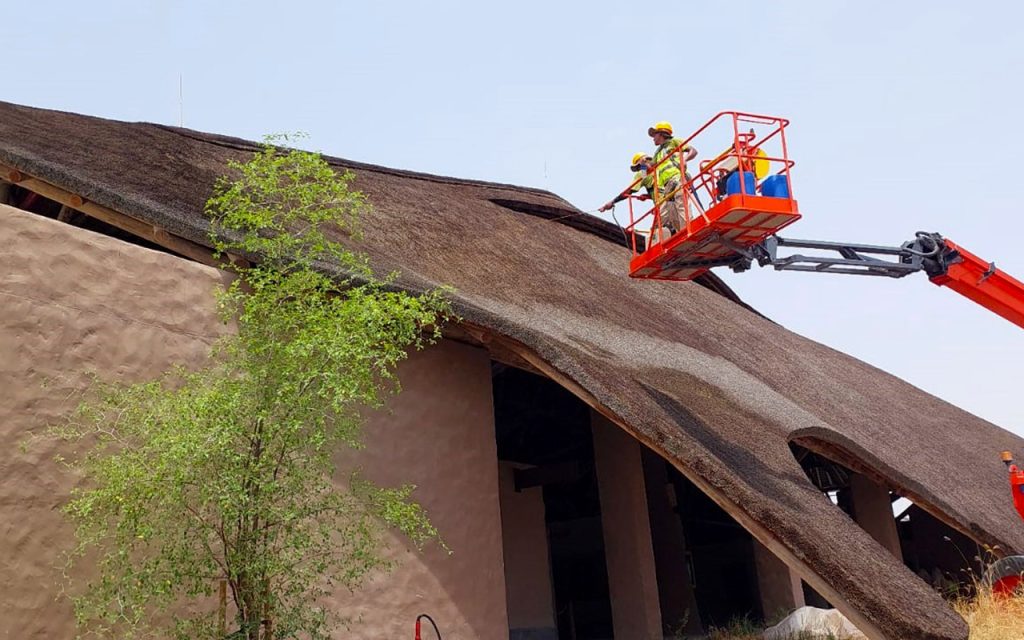
Less than most people expect. To keep a thatched roof safe and looking its best in Spain:
- Have the thatch and structure inspected regularly, especially on the coast.
- Renew the Fireshield coating every 3 years.
- Keep nearby vegetation trimmed and away from the roof during the dry season.
- Keep barbecues, heaters and open flames at a safe distance.
Cape Reed offers maintenance visits for the structures we install, so you do not have to manage this on your own.
Where does a thatched roof work best?
Thatch belongs on structures with a proper pitched roof: gazebos, pool houses, cabanas, beach bars and full residential roofs. It is not used on pergolas, which are built with timber lath, semi-shaded or waterproof tops instead. If you are planning a new structure, check whether you need a permit first. Our guide Do You Need a Permit to Build a Pergola or Gazebo in Spain? explains what to ask.
Frequently asked questions
How long does a thatched roof last in Spain?
A professionally installed Cape Reed thatched roof typically lasts 15 to 25 years on a coastal property in southern Spain before it needs refurbishment.
Is thatch suitable for a holiday home that is empty for months?
Yes. Thatch does not need daily care. Regular inspections and renewing the Fireshield coating every 3 years keep it in good condition while you are away.
Will a thatched roof attract insects or birds?
A tightly laid roof of dense reed gives pests little to work with. Regular inspections catch any wear early, before it becomes a problem.
Can you replace an old brezo roof with Cape Reed thatch?
Yes. It is one of our most common projects. We remove the brezo, check and repair the timber structure, and install a full Cape Reed roof with fire protection.
Thinking about thatch for your property?
With over 20 years of international experience, Cape Reed has built thatched structures on the Costa del Sol, in Portugal and across Europe. Explore our thatching work, or get in touch with our team to talk about your project.

About Cape Reed Team
Our expert team at Cape Reed Spain brings decades of experience in sustainable thatching and premium outdoor living solutions.
You Might Also Like
Discover more outdoor living inspiration
From Concept to Completion: What to Expect When Specifying a Commercial Thatched Roof
For architects and developers who haven’t specified thatch before, the biggest hesitation usually isn’t the ...
Thatch vs. Other Commercial Roofing Materials: The Complete Comparison Guide
When you’re specifying a roof for a hotel terrace, beach club or restaurant, the decision usually comes down to a ...
What Is Cape Reed Thatch — And Why Is It Different From Brezo?
If you have ever visited a beachfront resort, a luxury villa, or a boutique hotel in southern Spain and admired the natu...