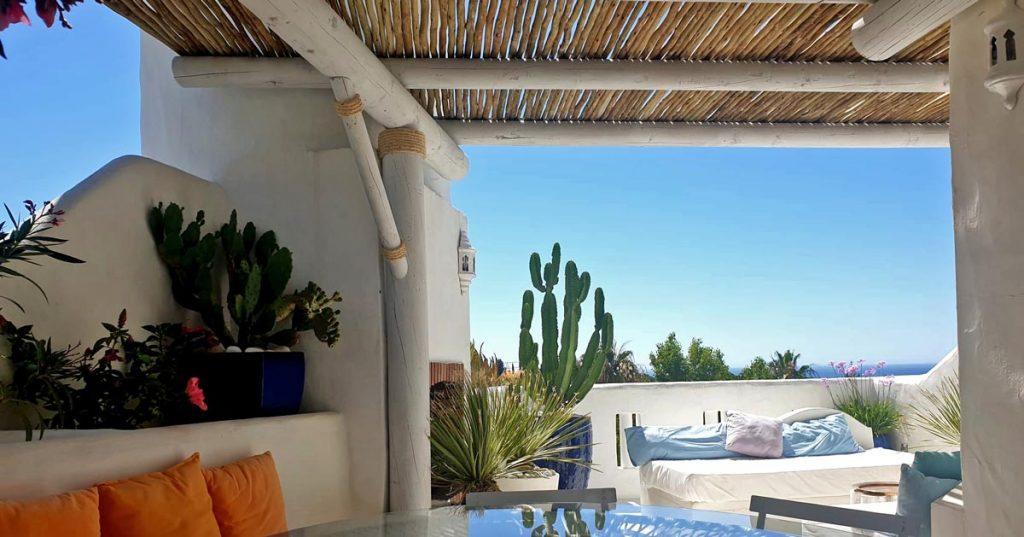
Choosing a pergola in Spain is mostly a question of how you want to live outside. Timber, aluminium and bioclimatic (louvred) pergolas can all provide shade, but they behave very differently in strong sun, heat, wind and, near the coast, salt air. Here is a straightforward comparison to help you decide.
Timber pergolas
Strengths
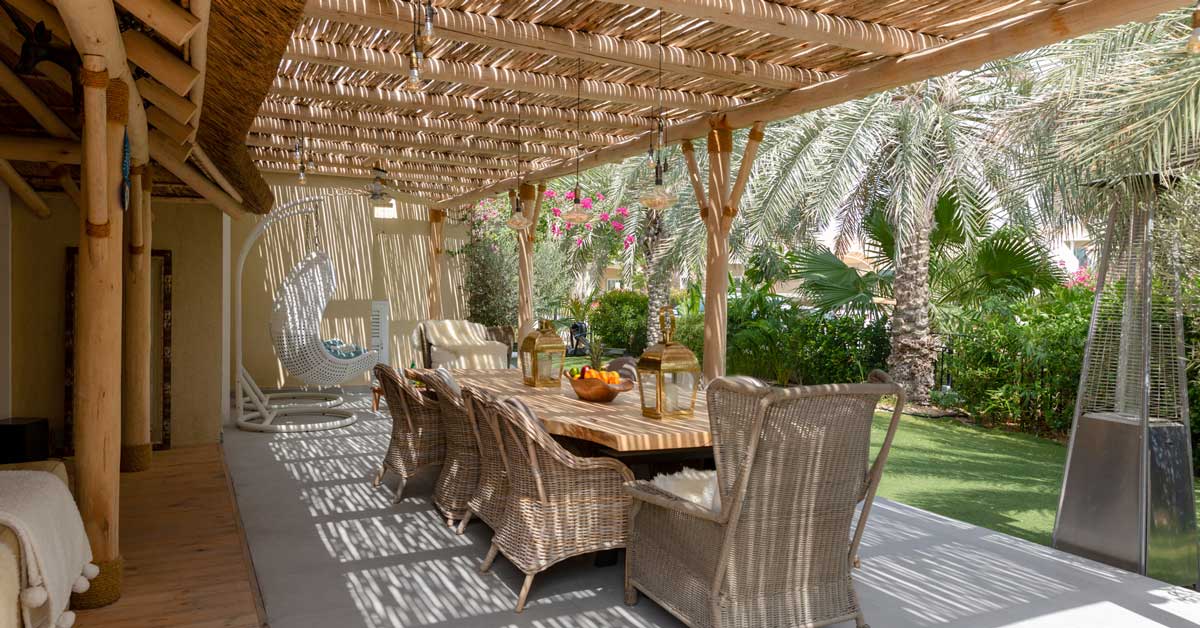
- Natural warmth and a look that blends into gardens and terraces.
- Material stays comfortable to the touch in the sun.
- Highly customisable in size, shape and detail.
- Available with an open lath, semi-shaded or waterproof top, to suit how you use the space.
- Renewable material with a lower manufacturing footprint.
Things to consider
- Needs periodic treatment to keep its finish, especially in exposed or coastal locations.
- Timber choice matters. Engineered laminated timber is more stable over long spans. See our comparison of laminated and solid timber.
Aluminium pergolas
Strengths
- Very low maintenance and resistant to rot and insects.
- Clean, modern lines.
- Strong in thin sections, which allows slim profiles.
Things to consider
- Metal absorbs and radiates heat, so a bare aluminium structure can feel hotter underneath in peak summer.
- A manufactured look can feel less at home in a natural garden or a rustic or beach setting.
- Less scope for custom, hand-finished detail.
Bioclimatic pergolas
Bioclimatic pergolas use adjustable louvres that rotate to control sun, ventilation and rain. They are usually built in aluminium, though louvre systems can be combined with other frames.
Strengths
- Adjustable shade and airflow through the day.
- Can often be closed against rain.
Things to consider
- Higher cost, moving parts and, usually, motorisation to maintain.
- Typically a contemporary look rather than a natural one.
Quick comparison
| Factor | Timber | Aluminium | Bioclimatic |
|---|---|---|---|
| Look | Natural, warm | Modern, slim | Contemporary |
| Heat comfort underneath | Very good | Fair, depends on roof | Good, adjustable |
| Maintenance | Periodic treatment | Low | Low frame, plus mechanics |
| Customisation | High | Medium | Medium |
| Rain protection | Waterproof option available | Depends on roof | Often closable |
Which should you choose?
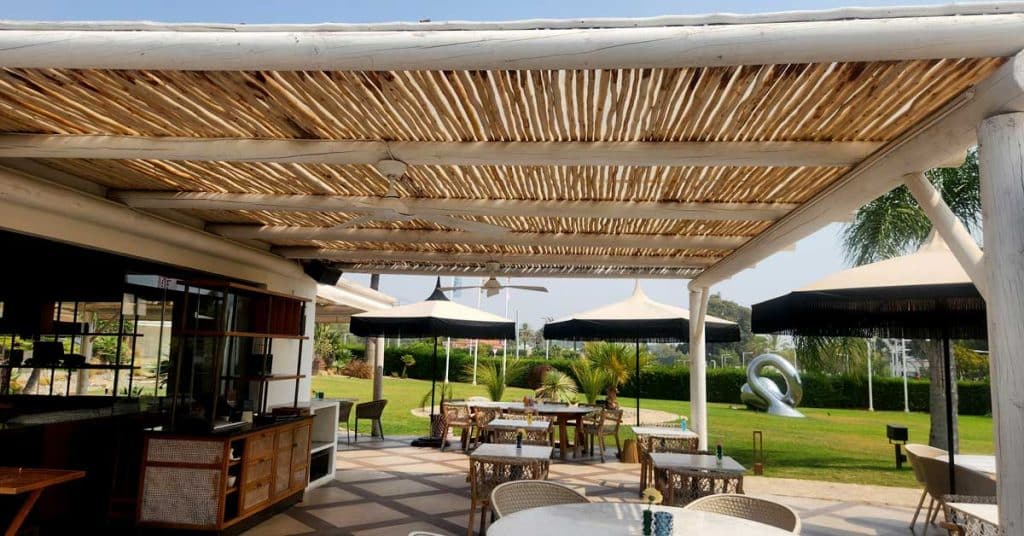
- Natural garden, villa, beach club or restaurant terrace: timber delivers warmth, atmosphere and comfortable shade. If you want a natural thatched roof, a gazebo is the right structure rather than a pergola.
- Contemporary architecture and minimal upkeep: aluminium is a practical fit.
- Flexible all-weather use of a terrace: a bioclimatic system may suit, if the budget allows.
We build timber pergolas and thatched gazebos, so we are biased towards natural materials. We would still rather you pick the right structure for your property than the wrong one for ours. If you are weighing options, we are happy to talk it through.
See also: Mediterranean Pergola Trends for 2026, Thatched Gazebo Ideas for Your Home and How Much Does a Wooden Pergola Cost in Spain?

About Cape Reed Team
Our expert team at Cape Reed Spain brings decades of experience in sustainable thatching and premium outdoor living solutions.
You Might Also Like
Discover more outdoor living inspiration
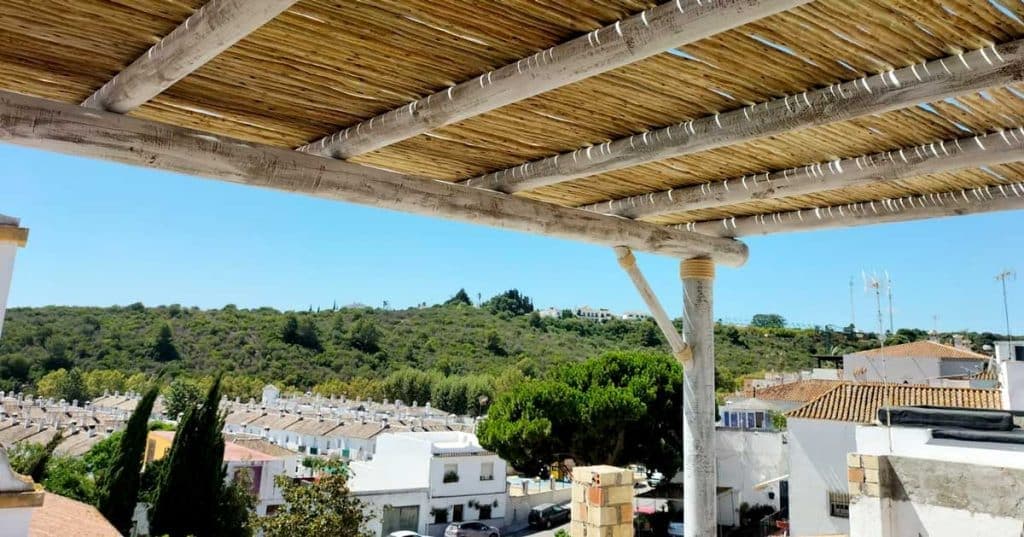
How Much Does a Wooden Pergola Cost in Spain? What Drives the Price
Size, timber, roof type and installation all shape the price of a wooden pergola. Here is what drives the cost in Spain ...
Do You Need a Permit to Build a Pergola or Gazebo in Spain?
Thinking of adding a pergola or gazebo to your Spanish home or business? Before you order, here is what decides whether ...
Mediterranean Pergola Trends for 2026
Outdoor living continues to shape the future of luxury architecture across Europe, and pergolas are now at the centre of...